
Every industrial revolution brought a wave of anxiety — machines replacing muscle, assembly lines replacing artisans, computers replacing clerical work. The AI era feels similar, but with a twist: this time, the “machines” can think.
Across industries - from HR and operations to logistics and marketing - AI at work is no longer a futuristic vision. It’s already here, automating routine tasks, analyzing massive datasets, and even generating creative content. Yet, the question remains: is AI replacing human beings, or is it empowering humans to do what they do best — think critically, empathize deeply, and innovate meaningfully?
The answer isn’t binary. AI in the workplace represents both challenge and opportunity. As we navigate the future of work and AI, the real transformation lies not in the replacement of human roles, but in their reimagination.
Headlines today echo a familiar fear — that intelligent systems will make human labor obsolete. Reports predict that millions of jobs could be automated in sectors like manufacturing, finance, and administration. Tasks once requiring meticulous human attention - data entry, auditing, or scheduling - can now be completed in seconds by AI tools.
This automation and jobs tension feeds into what many call “automation anxiety.” Workers wonder if their skills will stay relevant. Organizations fear social backlash from workforce reductions. The anxiety is understandable: automation challenges our sense of purpose and value at work.
But beneath this fear lies a crucial insight - AI doesn’t replace entire jobs; it replaces tasks. And when tasks are automated, new opportunities often emerge in their wake.
For every role disrupted, new ones appear — in analytics, data strategy, ethics, AI governance, and human experience design. The rise of AI brings a parallel rise in roles demanding creativity, emotional intelligence, and complex problem-solving.
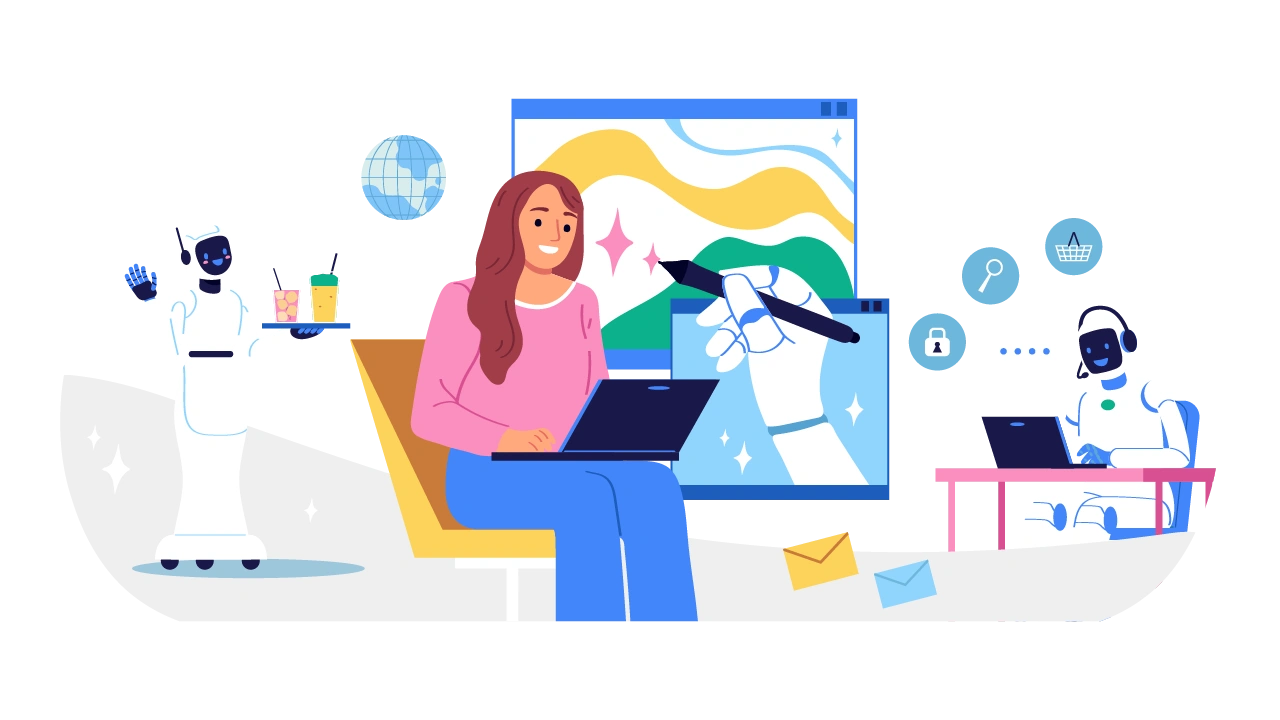
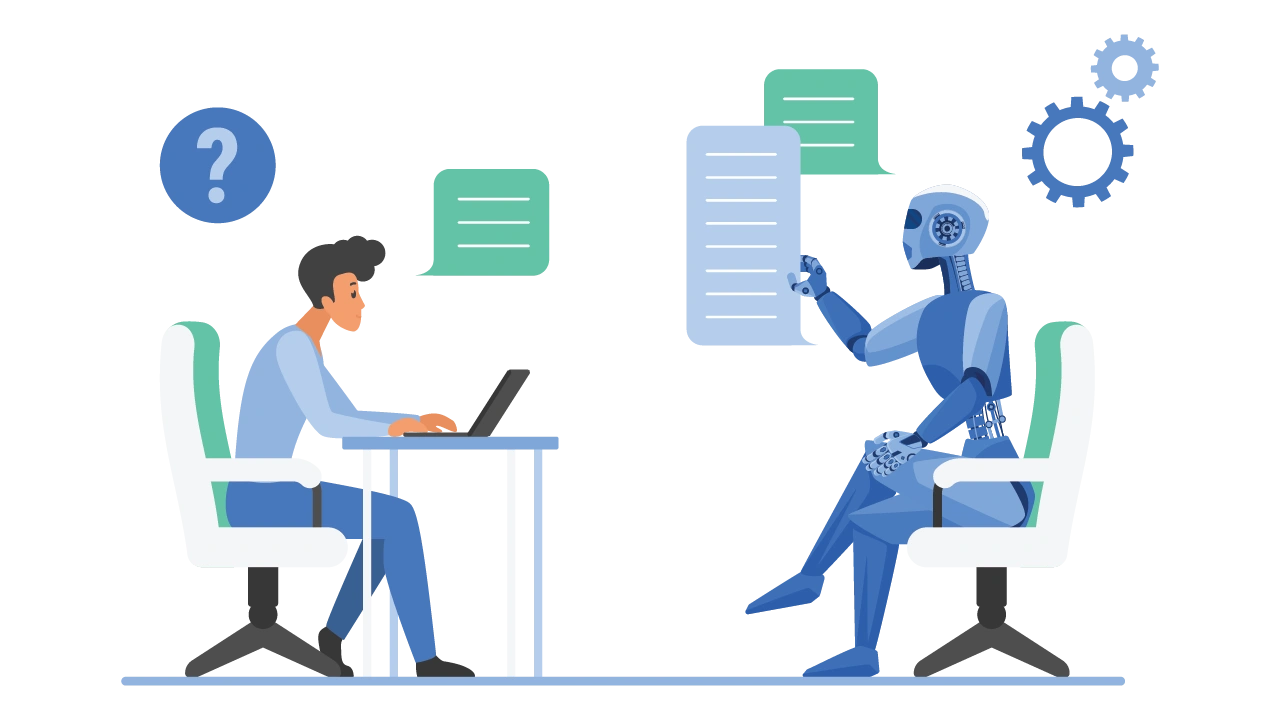
This shift marks the beginning of human-AI synergy, where humans focus on what machines cannot: empathy, ethics, innovation, and nuanced judgment. AI empowerment means that instead of competing with algorithms, we can collaborate with them to extend human potential.
The story of AI at work, then, isn’t one of extinction — it’s one of evolution.
The greatest gift of automation is liberation — freeing humans from repetitive, administrative, and low-value tasks. AI now manages recruitment screening, report generation, and operational monitoring, giving professionals time for strategy, ideation, and decision-making.
When AI and human collaboration takes center stage, productivity soars. Imagine HR professionals spending less time collating attendance data and more time designing engagement strategies. Picture marketers using AI to analyze trends while they craft storytelling campaigns that connect emotionally with audiences.
This digital augmentation doesn’t remove humans from the equation; it amplifies their contribution.
Even the most sophisticated algorithm lacks emotional context. Machines can identify burnout patterns but can’t sense unspoken team tension. They can recommend promotions based on data, but not loyalty, integrity, or courage.
As AI handles data-driven tasks, human judgment and emotional intelligence grow in importance. The leaders of tomorrow will be those who combine analytical thinking with empathy, and ethical discernment with digital fluency.
In this light, AI doesn’t diminish human relevance — it demands a higher level of humanity at work.
Forward-thinking organizations recognize that AI is most valuable when it augments human potential, not automates it away. AI can detect patterns, flag anomalies, or forecast outcomes — but it’s humans who decide what actions to take.
Take HR, for instance. AI tools can predict attrition risk or detect early signs of burnout. But it’s the manager’s empathetic conversation that retains talent. AI enables insight; humans enable impact.
Organizations that view AI collaboration through this lens of augmentation unlock higher creativity, agility, and trust.
To thrive in an AI-powered world, job design must evolve. Instead of asking “Which jobs can AI replace?” organizations should ask “How can AI help humans excel?”
This means restructuring roles where humans lead in creativity, relationship-building, and leadership, while AI supports with data, logic, and analysis. In marketing, AI can segment audiences — but only humans can craft a message that moves hearts. In HR, AI can screen resumes — but only humans can spot cultural fit.
The future of work and AI belongs to hybrid teams — where technology drives efficiency, and humans drive meaning.
For organizations, the shift from traditional jobs to AI-augmented roles brings an urgent need for reskilling and continuous learning. Static job descriptions are giving way to fluid skill ecosystems. HR leaders must pivot from one-time “training” programs to adaptive learning pathways that evolve alongside technology. Learning should integrate digital literacy, analytics, creativity, and problem- solving — not as isolated modules, but as a continuous journey of growth.
The new talent model values learning agility — the ability to unlearn and relearn as AI transforms workflows.
However, reskilling alone isn’t enough. AI transformation succeeds only when employees feel safe, not scared. Psychological safety is critical — employees must trust that AI will support, not sabotage, their careers.
Organizations must communicate transparently about AI adoption: what it will change, what it won’t, and how it benefits employees. Involving staff in co-designing AI-driven workflows builds ownership and reduces fear.
In essence, digital adoption must be as much about culture as it is about capability.
As AI systems influence hiring, promotions, and pay, ethical governance becomes non-negotiable. Algorithms can replicate biases hidden in historical data — unintentionally amplifying discrimination.
Therefore, organizations must keep humans “in the loop” for decisions that affect people’s lives and livelihoods. AI can recommend, but humans must review, interpret, and validate.
In performance management, for instance, AI may assess productivity patterns — but only human leaders can contextualize them with empathy and understanding.
Trust is the foundation of any successful digital transformation. Responsible AI adoption requires fairness, explainability, and data transparency.
Leaders must implement ethical AI frameworks — guiding how algorithms are designed, audited, and deployed. Employees should know how their data is used and have the right to question automated outcomes.
Such transparency not only protects compliance but strengthens organizational culture. In a world of automation, trust becomes the new currency of leadership.
Also Read : From Chatbots to True Partners: How Agentic AI Is Redefining the Future of HR
The conversation about AI at work is not about replacement — it’s about reinvention. As automation takes over repetitive work, humans gain the freedom to focus on creativity, empathy, and strategic thinking.
The workplace of the future won’t be man versus machine — it will be man with machine, co- creating a smarter, more humane world of work.
For HR leaders and business innovators, the goal is clear:
The real revolution lies in how we reimagine the workplace as a space where humans and AI amplify each other — unlocking new levels of productivity, creativity, and purpose.
Because when technology empowers humanity, progress becomes limitless.
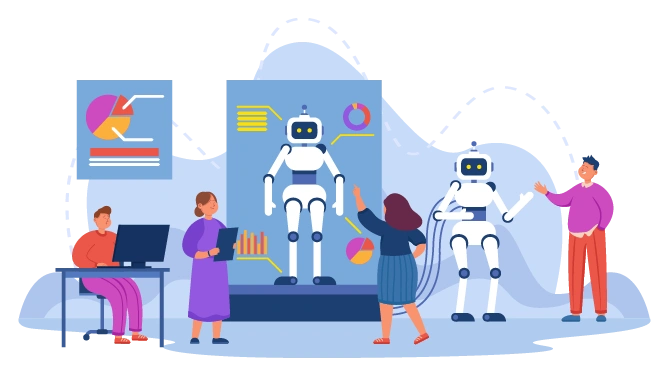



AI isn’t replacing entire jobs — it’s automating specific tasks within them. Roles that rely on routine, repetitive work are evolving, not disappearing. For example, AI can handle scheduling or data entry, allowing humans to focus on creative thinking, problem-solving, and emotional intelligence. The future of work is about AI and human collaboration, not competition.
Organizations can ensure AI empowerment by adopting a principle of augmentation over automation. This means using AI to assist employees, not substitute them. For example, AI tools can detect burnout risks or predict attrition, but it’s up to human managers to act empathetically. Transparent communication, employee involvement in AI rollout, and reskilling initiatives are key to building trust and empowerment.
As AI takes over mechanical tasks, demand grows for digital literacy, analytical thinking, creativity, and emotional intelligence. Employees must also build learning agility — the ability to continuously reskill and adapt as technology evolves. HR should promote adaptive learning pathways, integrating both technical and soft skills to prepare teams for an AI-integrated workplace.
HR is at the center of workforce transformation. It must balance technology integration with human-centric policies — leading reskilling programs, redesigning roles around human strengths, and ensuring ethical AI adoption. HR also plays a key role in maintaining psychological safety, ensuring employees see AI as a partner in performance, not a threat to their livelihood.
Trust begins with transparency and accountability. Companies should clearly communicate how AI tools make decisions, how employee data is used, and where human oversight remains essential. Implementing ethical AI frameworks — focusing on fairness, explainability, and human review — helps prevent bias and reinforces trust. When people understand AI’s purpose and limits, they’re more open to embracing it.
In today’s rapidly evolving work landscape, the arrival of Agentic AI in the workplace is shifting the way teams function, decisions...
As artificial intelligence continues to reshape the workplace, a new frontier is emerging-one where human workers and AI agents...
The “Future of Work” is no longer a distant vision—it’s today’s reality. In 2025, global organizations are navigating a landscape...

In a world where distributed teams are the norm rather than the exception, the role of culture is under the microscope like never before...
We hear about AI everywhere - from headlines about job losses to promises of supercharged productivity...
In today's dynamic and often unpredictable business landscape, growth is the ultimate aspiration for small and mid-sized enterprises (SMEs)...