
It Needs a Language of Its Own
On why importing Western HR frameworks into the Indian context produces impressive documentation and unremarkable results — and what a genuinely India-native approach looks like
There is a particular kind of institutional optimism that takes hold in a conference room when a new framework is introduced. The slides are clean. The model is elegant. The logic is internally consistent and the research citations are impeccable. The room nods. Someone says "this is exactly what we need." The framework is adopted. The implementation begins. And then, six months later, in the same conference room, someone asks why the results are not matching the promise.
The answer, in most Indian organisations that have imported HR frameworks from global consulting firms or Western research institutions, is always a version of the same thing: the framework was designed for a context that does not describe this organisation, this workforce, this leadership culture, this market, or this moment. The logic was sound. The design was wrong. Not wrong in an abstract sense — wrong for the specific texture of what it was applied to.
India has 63 million MSMEs. They employ more than 110 million people. They are, outside of agriculture, the largest employer base in the country. They are the organisations where most Indian people build their professional lives, develop their careers, and make their economic futures. And the HR frameworks available to them — for talent management, performance, development, engagement, succession, and now AI adoption — were almost entirely designed for something else.
They were designed for large organisations with dedicated HR functions, mature technology infrastructure, established competency frameworks, and the organisational bandwidth to implement complex multi-year people strategies. They were designed in the United States and Western Europe, in contexts where the workforce demographic is ageing, where the talent market is tight, where the regulatory environment is stable and well-documented, and where the relationship between employer and employee has been shaped by decades of labour market history that India does not share. They have been translated into English-language slide decks, packaged with Indian case studies that were retrofitted to fit the framework rather than built from the ground up, and deployed into organisations where they produce the appearance of HR sophistication without the substance of it.
I want to name this pattern clearly, because it is not a failure of the organisations that adopted these frameworks. It is a failure of the frameworks to be honest about what they are designed for. And I want to name it because the alternative — building HR frameworks that are genuinely designed for the Indian MSME context, the Indian gig economy context, the Indian startup context — is not only possible. It has begun.
Think of it this way. Imagine giving a map of Paris to someone trying to navigate Mumbai. The map is beautifully detailed. The street names are clearly marked. The landmarks are accurately placed. And it is completely useless — not because the map is wrong, but because it is mapping a different city. The person trying to navigate Mumbai does not need a better map of Paris. They need a map of Mumbai.
This is the situation that most Indian MSMEs are in with their HR frameworks. They have detailed, sophisticated maps of Paris. The city they are trying to navigate is something else entirely.
What does Mumbai actually look like? It looks like this. The MSME workforce is younger than the global frameworks assume — India has one of the youngest workforce demographics in the world, with a median age below 30. The relationship between employer and employee is shaped by family structures, community obligations, and economic realities that are distinct from Western employment norms. The talent market in many MSME sectors is characterised not by the scarcity that Western HR frameworks assume but by abundance — large numbers of capable people who are underemployed or misemployed, in roles that do not match their capability, because no structured mechanism exists to match talent to need at the MSME level. The regulatory environment is multi-state, complex, frequently changing, and often navigated informally rather than through the structured compliance processes that global frameworks presuppose.
The future of HR in India's MSMEs will not be found in a better translation of what Deloitte or McKinsey published last year. It will be found in frameworks built by people who understand the specific texture of what they are designing for. This is not nationalism. It is design thinking. Good design begins with the user, not with the solution.
The work of building those frameworks has begun. Talent Synergy's AI-native HR service delivery model for MSMEs is one of the most significant examples. What makes it genuinely distinctive — and what makes it a model rather than a methodology — is not the AI tools it deploys. It is who deploys them. The research, the problem-finding, the framework-building, the AI training, the testing, and the implementation are all being done by freshers and early professionals through the FresherRank programme. People who are close enough to the beginning of their professional lives that they have not yet been colonised by the assumptions of frameworks designed for other contexts. People who are, by disposition, likely to ask "why does it work this way?" rather than "how do I implement what I have been taught?"
The GIGglers framework is another example of the same principle. Three to five years of research into what makes gig work succeed in India — not in the platform economy of San Francisco or the flexible labour market of London, but in the specific context of Indian gig professionals navigating Indian clients, Indian organisations, and Indian career structures. The fourteen competencies that emerged from that research are not derived from a Western gig economy model. They are derived from the stories and experiences of people who are actually doing this work, in this context, right now.
These two pieces of work — the AI-native HR model and the GIGglers framework — are not initiatives. They are evidence of a different way of building HR knowledge. They start from the specific problem, in the specific context, with the specific people who are closest to it. They are built with practitioners rather than delivered to them. They are validated against lived experience rather than theoretical models. And they produce frameworks that actually fit the city they are trying to map.
For every HR leader, every MSME founder, every startup building a people function, and every gig professional trying to make sense of an economy that moves faster than the frameworks designed to describe it — the question is not "which global framework should we adopt?" The question is "what does our specific situation actually require — and who is closest to that situation?"
In India, the answer is increasingly: the people who are already here, already working, already navigating the specific complexity that the frameworks were not built for. The freshers who are building AI HR systems from scratch. The gig professionals who are validating their own competency model. The MSME leaders who are implementing HR practices that were designed for their actual workforce rather than a theoretical one.
The HR language that India needs has not been borrowed. It is being written. And it is being written in the right language — by the right people — for the first time.
Almost all of the HR frameworks in use in Indian organisations today — for talent management, performance, L&D, engagement, and succession — were built in and for the organisational contexts of the United States and Western Europe. They were adapted for India, not designed for it. The adaptation has produced HR functions that look right on paper and perform below potential in practice. The gap between the framework and the reality is not a competence gap. It is a design gap.
India has 63 million MSMEs employing more than 110 million people — the largest employer base in the country after agriculture. Fewer than 3% of these organisations have a structured HR function. The HR frameworks that exist for MSMEs are almost entirely repurposed from enterprise contexts that share almost no operating characteristics with a 200-person textile manufacturer in Surat or a 500-person logistics company in Hyderabad.
The future of HR in India's MSMEs does not depend on a better translation of what Gartner or McKinsey said last year. It depends on building new frameworks from the ground up — designed for Indian operating realities, tested in Indian organisational contexts, validated by Indian practitioners. That work has begun. It is being done by freshers, by researchers, by gig professionals, and by the organisations that have decided to stop waiting for the West to develop something they can adapt.
SO…
“Of the HR frameworks, models, and practices your organisation is currently using — how many of them were originally designed for a 200-employee Indian company? And how many were designed for something very different and adapted into this context?”
Talent Synergy is building India's first AI-native HR service delivery model specifically for MSMEs — researched, designed, and implemented by freshers through the FresherRank programme. The GIGglers framework is the first validated competency model for India's gig workforce. These are not adaptations. They are originals.
talent-synergy.com · badgefree.com






In today’s rapidly evolving work landscape, the arrival of Agentic AI in the workplace is shifting the way teams function, decisions...
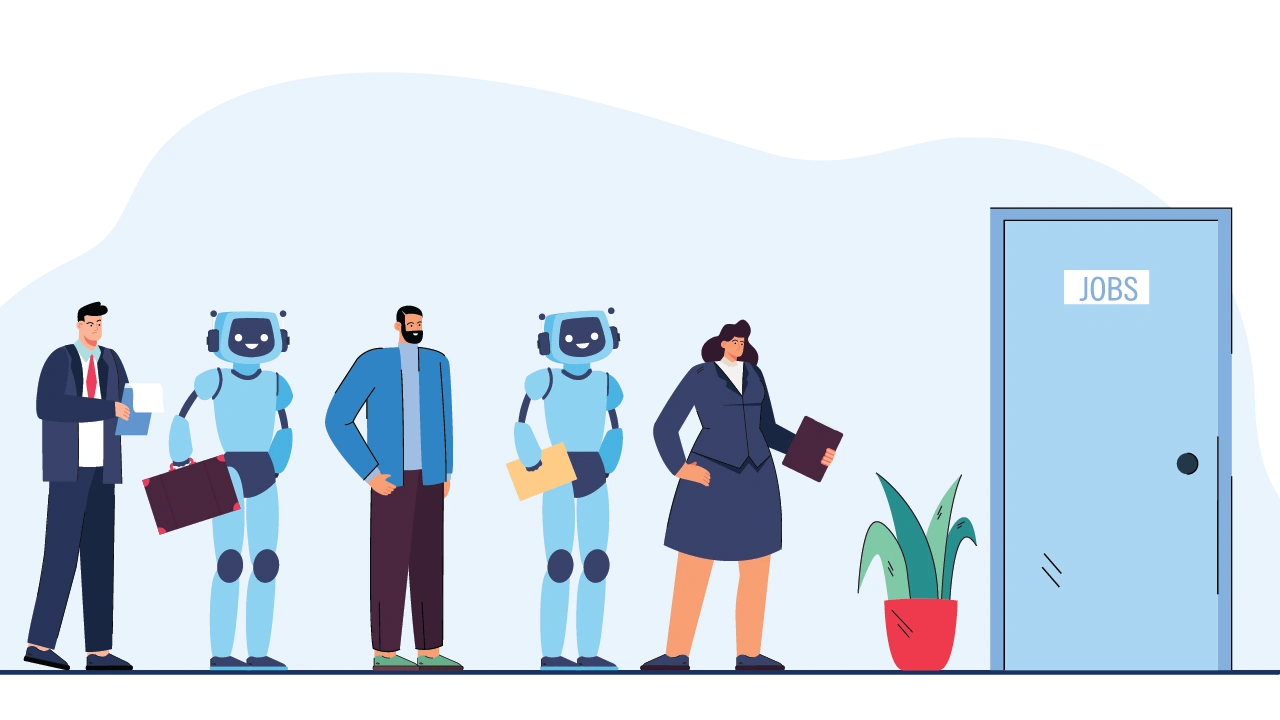
As artificial intelligence continues to reshape the workplace, a new frontier is emerging-one where human workers and AI agents...

The “Future of Work” is no longer a distant vision—it’s today’s reality. In 2025, global organizations are navigating a landscape...
In a world where distributed teams are the norm rather than the exception, the role of culture is under the microscope like never before...
We hear about AI everywhere - from headlines about job losses to promises of supercharged productivity...

In today's dynamic and often unpredictable business landscape, growth is the ultimate aspiration for small and mid-sized enterprises (SMEs)...